
Breathing and Grounding Exercises for Sudden Anxiety
Have you ever experienced a sudden rush of anxiety that caused your heart to race without any obvious reason? These episodes of sudden anxiety can feel overwhelming, especially when racing thoughts, muscle tension, and physical discomfort appear all at once. During these moments, even everyday tasks may seem difficult, and the mind can quickly drift toward fear and worry.
This reaction is often linked to the body’s natural stress response, where the nervous system becomes highly alert despite the absence of real danger. In these situations, Breathing and Grounding Exercises for Sudden Anxiety can provide immediate support. Techniques such as deep breathing, grounding techniques, mindfulness exercises, and relaxation practices help soothe the nervous system, enhance attention to the present moment, and improve overall emotional regulation. As a result, these methods can reduce emotional overwhelm and serve as effective coping strategies for managing anxiety.
If you want to explore more about anxiety symptoms, causes, and treatment options, the World Health Organization (WHO) guide on anxiety disorders guide on anxiety disorders offers reliable, evidence-based information for both individuals and families.
What Is Sudden Anxiety?
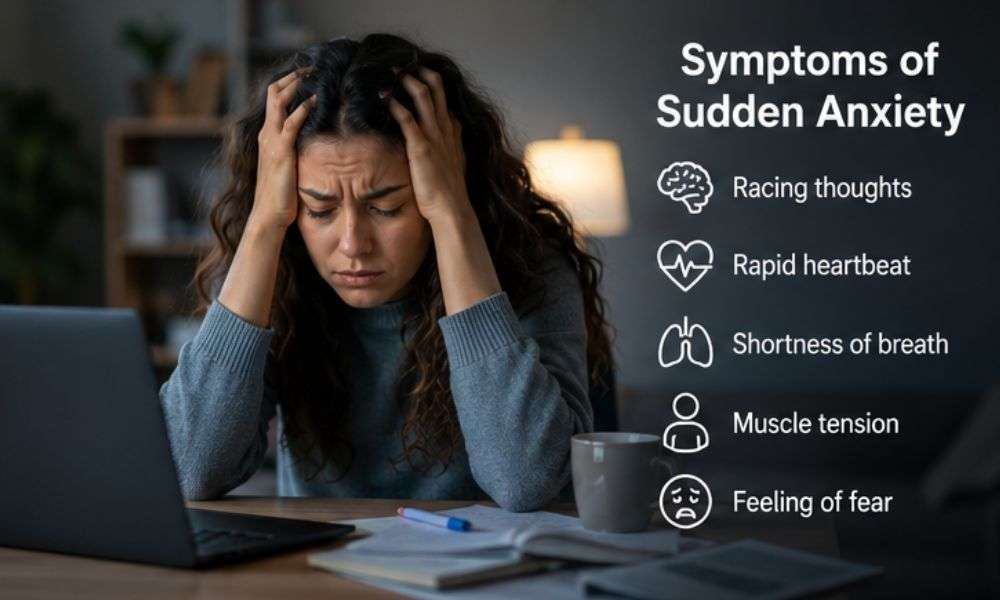
Sudden anxiety is an intense emotional and physical reaction that can arise unexpectedly. It frequently feels strong and confusing because the body reacts as though there is an immediate threat, even when the situation is actually safe. This response is closely connected to the fight or flight response, which is activated during stress. In many situations, the nervous system becomes highly alert, leading to physical and emotional changes that can feel hard to manage.
Common Anxiety Symptoms
When sudden anxiety occurs, it may appear in various ways across both the body and mind. Common signs include a fast or pounding heartbeat, racing thoughts, and muscle tightness. Many people also notice emotional overwhelm, trouble focusing, and a temporary feeling of losing control.
Why Sudden Anxiety Happens
Sudden anxiety happens when the body’s natural survival mechanism is triggered. The nervous system sends out signals that prepare the body to respond quickly, even if there is no real danger present. This reaction can raise heart rate, increase muscle tension, and heighten awareness, which may feel uncomfortable when it happens without warning.
How Breathing and Grounding Exercises Help Sudden Anxiety
Breathing and grounding techniques are simple yet effective tools that help the body calm down when anxiety feels overwhelming. They work by redirecting attention away from fear-based thoughts and gently bringing awareness back to the present moment. This process helps break the cycle of racing thoughts and emotional overload that often appears during episodes of sudden anxiety.
How Deep Breathing Slows the Body’s Stress Response
Deep breathing is an important technique for reducing the body’s stress response. When you breathe slowly and in a controlled way, the body starts to feel safer, and the nervous system naturally begins to relax and calm down. This helps reduce physical symptoms such as a rapid heartbeat and muscle tightness, while also promoting a more stable and balanced mental state with better emotional regulation.
How Grounding Techniques Bring Attention to the Present Moment
Grounding techniques work in a slightly different but equally powerful way. They help shift attention back to the present moment awareness by focusing on what you can see, hear, touch, or physically feel. This simple shift helps reduce emotional distress and prevents the mind from getting stuck in repetitive anxious thinking patterns.
Benefits for Emotional Regulation and Anxiety Management
When used together, these approaches support stronger emotional regulation and help reduce the intensity of anxiety symptoms. With regular practice, they train the mind to respond more calmly to stress instead of reacting automatically. Over time, this builds greater mental stability and improves long-term anxiety management and overall mental wellness. For more ways to manage everyday stress, explore our guide on Stress Relief Activities for Better Mental Health.
5 Breathing Exercises for Sudden Anxiety
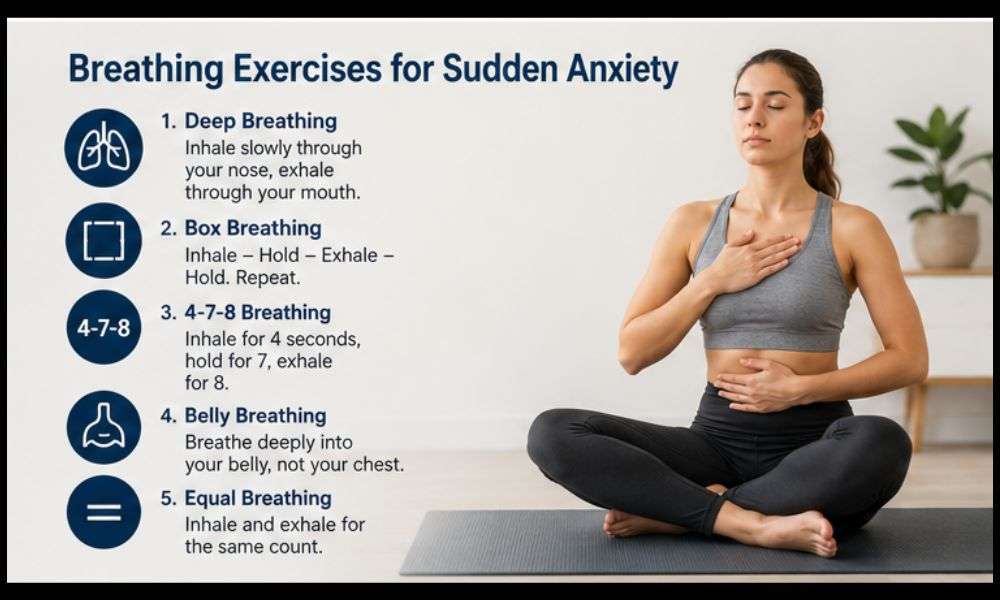
When sudden anxiety feels strong, simple breathing techniques can help slow down the body and bring back a sense of control. These exercises are easy to use in any setting and work by calming the nervous system, reducing physical tension, and easing emotional distress in a short time.
Box Breathing
Box breathing is a straightforward technique where each stage of breathing is done for the same duration. You inhale for four seconds, hold for four seconds, exhale for four seconds, and pause again for four seconds before repeating. This steady rhythm helps improve focus, reduce racing thoughts, and bring a more
Belly Breathing
Belly breathing, also called diaphragmatic breathing, involves taking deep breaths into the stomach rather than the chest. As you breathe in, the abdomen rises, and as you breathe out, it gently lowers. This method activates the body’s natural relaxation response, slows breathing, and helps ease muscle tension often linked with anxiety.
4-7-8 Breathing
The 4-7-8 breathing technique is an easy-to-follow practice that can have a calming effect on both the mind and body. Breathe in through your nose for a count of four, hold the breath for seven seconds, then slowly release it over eight seconds. This pattern helps reduce heart rate and supports the body in shifting away from the fight or flight response, creating a calming and steady effect.
Pursed-Lip Breathing
Pursed-lip breathing is done by breathing in through the nose and then slowly breathing out through gently tightened lips. This method helps regulate breathing pace and supports smoother airflow control. It is particularly helpful when breathing becomes quick or shallow during episodes of sudden anxiety.
Extended Exhale Breathing
Extended exhale breathing is a technique where the breathing out phase is made longer than the breathing in phase. For instance, you can take a three-second inhale and extend the exhale to around six seconds. A longer exhale sends a calming message to the nervous system, which helps release tension and guides the body back into a more relaxed and steady state.
5 Grounding Exercises for Sudden Anxiety
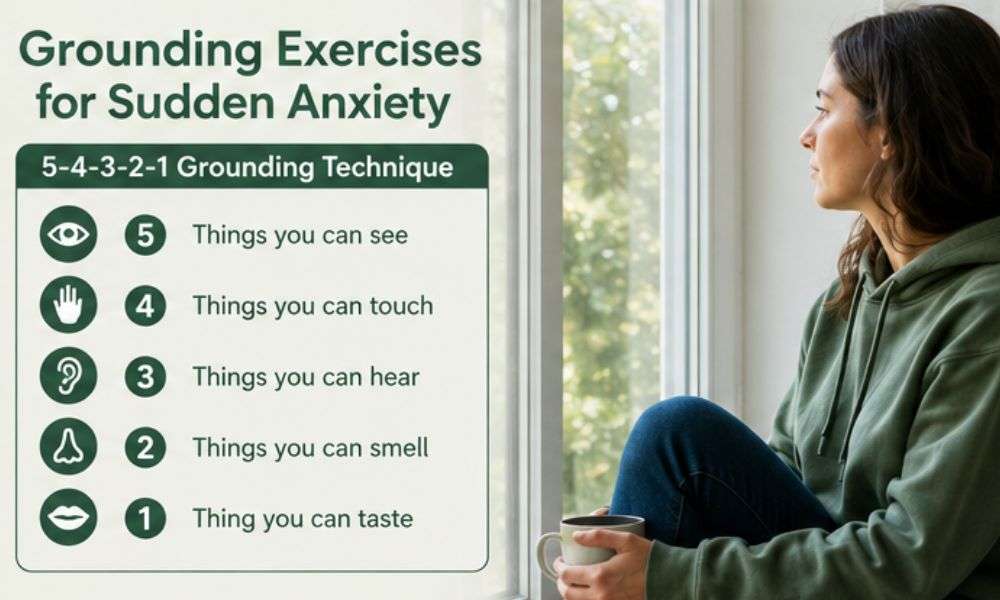
Grounding techniques are simple practices that help reduce overthinking and gently shift your focus back to the present moment. They are especially helpful during sudden anxiety, when thoughts feel intense and difficult to manage.
5-4-3-2-1 Method to Reset the Mind
This is one of the most widely used grounding techniques for quickly calming the mind. Start by noticing five things you can see, four things you can physically touch, three sounds you can hear, two scents you can smell, and one thing you can taste. This step-by-step sensory process helps redirect focus away from racing thoughts and supports better emotional regulation by reconnecting the mind with reality.
Name Objects Around You
Look around your surroundings and gradually notice objects such as a chair, wall, phone, or table. This simple exercise interrupts anxious thinking loops and shifts attention toward the external world, helping reduce mental overload and improve focus and awareness.
Hold a Textured Object
Pick up any item with a noticeable texture, such as a key, stone, or fabric. Pay attention to its temperature, weight, and surface details. This sensory focus supports mindfulness exercises, reduces emotional intensity, and helps restore mental stability during anxious moments.
Focus on Physical Sensations
Pay attention to physical contact points in your body, like your feet resting on the ground or your hands placed on a surface. This practice strengthens present moment awareness, reduces mental drifting, and helps regulate the stress response by anchoring attention in the body.
Gentle Walking Exercise
Slow, mindful walking can also act as a grounding tool. Focus on each step—how your foot lifts, moves, and makes contact with the ground. This gentle movement supports calming exercises, releases built-up tension, and improves mental clarity during periods of anxiety.
When to Use Breathing and Grounding Exercises
These techniques can support both mind and body in everyday life, not just during stressful episodes. With consistent practice, they improve emotional balance and strengthen overall stress management skills.
During Sudden Anxiety
These exercises are most effective when anxiety appears suddenly and feels intense. They help calm physical reactions, reduce emotional overwhelm, and ease symptoms within minutes.
Before Stressful Events
Practicing these techniques before exams, meetings, or important situations can prepare the mind for pressure. They reduce tension and improve focus, supporting better stress relief techniques and mental readiness.
During Overwhelming Emotions
When emotions become intense, breathing and grounding create a pause between feeling and reaction. This pause supports better emotional regulation and helps you respond more calmly instead of reacting impulsively.
At Night
Using these techniques before sleep helps release accumulated stress from the day. They slow down mental activity, relax the body, and support better rest by calming the nervous system.
During Overthinking
When thoughts repeat continuously, grounding techniques help break the cycle. They shift attention away from worry patterns and bring the mind back to the present moment awareness, reducing racing thoughts.
When to Seek Professional Support
While Breathing and Grounding Exercises can be very effective for daily anxiety management, there are situations where professional guidance becomes important. If symptoms persist or begin affecting daily functioning, mental health support can provide deeper and more structured care.
When Anxiety Becomes Frequent
If anxiety starts occurring regularly without a clear trigger, it may indicate an underlying concern. In such cases, professional help can identify emotional triggers and provide long-term coping strategies. Better understanding of mental health can also support early awareness, as discussed in Mental Health Literacy Is Key to Ending Stigma, which highlights how knowledge improves recognition of emotional struggles.
When Panic Attacks Occur
If anxiety escalates into panic attacks, the physical and emotional symptoms may feel intense and difficult to manage. Professional support can help explain these episodes and teach safer, more effective ways to cope with panic symptoms.
When Daily Life Is Affected
If anxiety begins to interfere with sleep, work, studies, or relationships, it should not be ignored. In such cases, structured treatment can help restore balance and improve overall quality of life through guided anxiety management strategies.
Frequently Asked Questions
What are Breathing and Grounding Exercises?
They are simple techniques used to calm the body and redirect attention away from anxious thinking. These practices support relaxation and help bring focus back to the present moment awareness.
What is the best grounding exercise?
The 5-4-3-2-1 method is considered one of the most effective grounding techniques. It engages the senses to shift attention away from worry and reconnect with surroundings.
How fast do they work?
Many individuals experience a sense of relief within just a few minutes. However, the response can vary depending on anxiety intensity and regular practice of stress relief techniques.
Can they stop anxiety attacks?
They may not completely stop an anxiety attack instantly, but they can reduce its intensity and help restore a sense of control more quickly.
Conclusion
Breathing and Grounding Exercises are simple yet powerful tools for managing sudden anxiety in daily life. They help calm the body, reduce racing thoughts, and bring attention back to the present moment awareness when things feel overwhelming.
With regular practice, these techniques improve emotional regulation and strengthen long-term mental wellness. Over time, they support a calmer response to stress and help build more stable coping patterns in everyday situations.
You can learn more through our guide on Education and Awareness in Mental Health, which explores how understanding mental health can improve early recognition and encourage healthier coping habits over time.
Author Bio
Written and researched by Som Adnan for Mental Health Knowledge. This content is based on credible health sources and mental health research and is intended to provide accurate, practical, and reader-friendly information.