
Can Caffeine Trigger Panic Attacks?
by Som Adnan
Can Caffeine Trigger Panic Attacks? Many people notice symptoms such as a racing heart, shakiness, sweating, and nervousness after consuming caffeine. Because these reactions can resemble panic attack symptoms, it is common to wonder whether caffeine may contribute to or worsen feelings of panic and anxiety.
Understanding this difference is important for better daily health choices and mental balance. When people recognize how caffeine affects them, it becomes easier to manage symptoms and avoid unnecessary discomfort in everyday life.
What Are Panic Attacks?
Understanding Panic Attacks
A panic attack is a sudden wave of intense fear or discomfort that appears without warning. It can feel very real and overwhelming, even when there is no actual danger around you. Many people experience it only once, while others may have repeated episodes linked to stress or anxiety conditions. During these moments, the body reacts strongly, almost like it is facing an emergency situation.
Common emotional and physical symptoms include a racing heartbeat, sweating, trembling, chest discomfort, dizziness, shortness of breath, and a strong feeling of fear or losing control. These symptoms usually peak quickly and can feel frightening, especially if someone does not understand what is happening.
How Panic Attacks Differ From Anxiety
Panic attacks and anxiety are often confused, but they are not the same. Anxiety typically develops gradually over time and is often linked to ongoing stress or concerns about future events. It can last for hours or even days, depending on the situation.
In contrast, a panic attack is sudden and intense. It reaches its peak within minutes and then gradually fades. While anxiety feels like ongoing tension, panic attacks feel like a sudden emotional and physical “alarm” in the body.
How Caffeine Affects the Brain and Body
What Happens After You Consume Caffeine?
When you drink coffee or any caffeinated drink, it quickly enters your bloodstream through the stomach and small intestine. Within a short time, it reaches the brain and starts changing how your body feels. This fast process is why people often feel more awake within minutes of their first sip.
Caffeine mainly works by blocking signals that tell your brain it is time to rest. Because of this, alertness and energy increase, but the body can also feel slightly restless if the dose is high or if a person is sensitive.
Caffeine and the Fight-or-Flight Response
Caffeine can activate the body’s natural stress system, often called the fight-or-flight response. When this happens, the brain releases chemicals that prepare you for action, even if there is no real danger.
This response can lead to a faster heartbeat, increased blood pressure, and a feeling of being “on edge.” Stress hormones also become more active, which may explain why some people feel nervous or discomfort after consuming too much caffeine.
The Role of Adenosine and Brain Chemistry
Inside the brain, a chemical called adenosine helps the body relax and prepare for sleep. Caffeine blocks this chemical from working properly, which keeps the brain in a more alert state.
Because relaxation signals are reduced, sleep patterns can get disturbed, and stress levels may feel higher. Over time, this can affect how the body manages energy, focus, and emotional balance, especially in sensitive individuals.
Can Caffeine Trigger Panic Attacks?
What Research Says
Some studies suggest that caffeine can increase feelings of anxiety in sensitive individuals. It stimulates the central nervous system and may increase alertness, but in some people it can also intensify panic attacks and anxiety symptoms. High caffeine intake has been linked with stronger physical reactions, especially in people with existing sensitivity.
Research also shows that the effects are not the same for everyone. While some people tolerate caffeine well, others may experience stronger reactions due to caffeine sensitivity, lifestyle habits, and stress levels.
Why Caffeine Can Mimic Panic Attack Symptoms
Caffeine can create body sensations that feel very similar to panic attack symptoms, which is why many people get confused.
Common reactions include racing heartbeat, shakiness, sweating, and shortness of breath. These are caused by activation of the stress response, which prepares the body for action even when there is no real danger. In sensitive individuals, this can feel overwhelming and may lead to fear or panic-like feelings.
Can One Cup of Coffee Trigger Anxiety?
Yes, in some people even one cup can trigger anxiety-like reactions. This depends on individual tolerance and how strongly the body reacts to stimulants.
People who are more sensitive to caffeine tend to feel its effects sooner, while others may experience only mild or no noticeable reactions at all. Factors like sleep quality, stress levels, and existing anxiety symptoms all play an important role in how the body responds.
Why Caffeine Mimics Panic Symptoms
Caffeine stimulates the nervous system and increases heart rate, alertness, and body tension. In sensitive people, these effects can feel like sudden panic even without real danger. Because the symptoms appear quickly, the body may misread them as panic symptoms, especially in those with higher caffeine sensitivity.
Caffeine Symptoms vs Panic Attack Symptoms
| Symptom | Excess Caffeine | Panic Attack |
|---|---|---|
| Racing Heart | ✓ | ✓ |
| Sweating | ✓ | ✓ |
| Trembling | ✓ | ✓ |
| Dizziness | ✓ | ✓ |
| Fear of Losing Control | Rare | Common |
| Sudden Intense Fear | Rare | Common |
Symptoms of Caffeine-Induced Anxiety and Panic
Physical Symptoms
When caffeine affects the body strongly, it can create uncomfortable physical reactions that feel similar to anxiety or panic. These signs may appear within a short time after consumption and can vary from person to person.
Common physical effects include heart palpitations, tremors, dizziness, chest discomfort, and restlessness. In some cases, these symptoms are linked with a stronger stress response, which makes the body feel more alert and tense than usual.
Mental and Emotional Symptoms
Caffeine can also affect the mind by increasing alertness too much, which may feel overwhelming for sensitive individuals. This can impact mood and focus throughout the day.
Common mental and emotional effects include racing thoughts, fear and worry, irritability, and difficulty concentrating. These reactions are often more noticeable in people who already have anxiety symptoms or higher caffeine sensitivity, making everyday stress feel more intense than normal.
Who Is Most at Risk?
People With Existing Anxiety Disorders
People who already experience anxiety symptoms may notice stronger reactions to caffeine. Even small amounts can sometimes increase nervous feelings or physical tension. The body becomes more reactive, which can make daily stress feel harder to manage.
Individuals With Panic Disorder
Those living with panic attacks or panic disorder are often more sensitive to stimulants. Caffeine may increase physical sensations like a racing heartbeat or restlessness, which can sometimes feel similar to a panic episode.
Those Sensitive to Caffeine
Some people naturally have higher caffeine sensitivity due to genetics and how their body processes stimulants. For them, even one cup of coffee can lead to noticeable changes in energy, mood, or focus.
People Experiencing Chronic Stress
Long-term stress can keep the body in a constant state of heightened alertness, making it harder to relax and recover properly. When caffeine is added, it may intensify the stress response, making the nervous system feel overactive and harder to calm down.
Individuals With Sleep Problems
Poor sleep can make the body more reactive to caffeine. When rest is already low, stimulants can disrupt balance further and increase feelings of restlessness or discomfort throughout the day.
These symptoms often overlap with other anxiety-related conditions, which we discussed in detail in our article on Impact of Smartphones on Mental Health and how digital stress can increase nervous system sensitivity.
Risk Factors That Increase Caffeine Sensitivity
Genetics and Caffeine Metabolism
Some people naturally process caffeine slower than others. This depends on how the liver breaks it down and how the brain responds to stimulants. When metabolism is slow, caffeine stays in the body longer, which can increase caffeine sensitivity and make physical reactions feel stronger than usual.
Hormonal Changes
Hormonal shifts can change how the body reacts to caffeine. This is often seen during menstrual cycles, pregnancy, or other natural changes in the body. These shifts may increase the likelihood of feeling jittery, restless, or emotionally sensitive after caffeine intake.
Certain Medications
Some medications can interact with caffeine and intensify its effects. This may lead to stronger stimulation in the nervous system, making the body feel more alert or tense than expected. In some cases, it can also increase the chance of anxiety-like reactions.
Lack of Sleep
When the body is already tired, caffeine can feel much stronger. Poor sleep affects emotional balance and stress control, making it easier for the stress response to become overactive. This can lead to restlessness or difficulty relaxing even after small amounts.
Common Sources of Caffeine You May Overlook
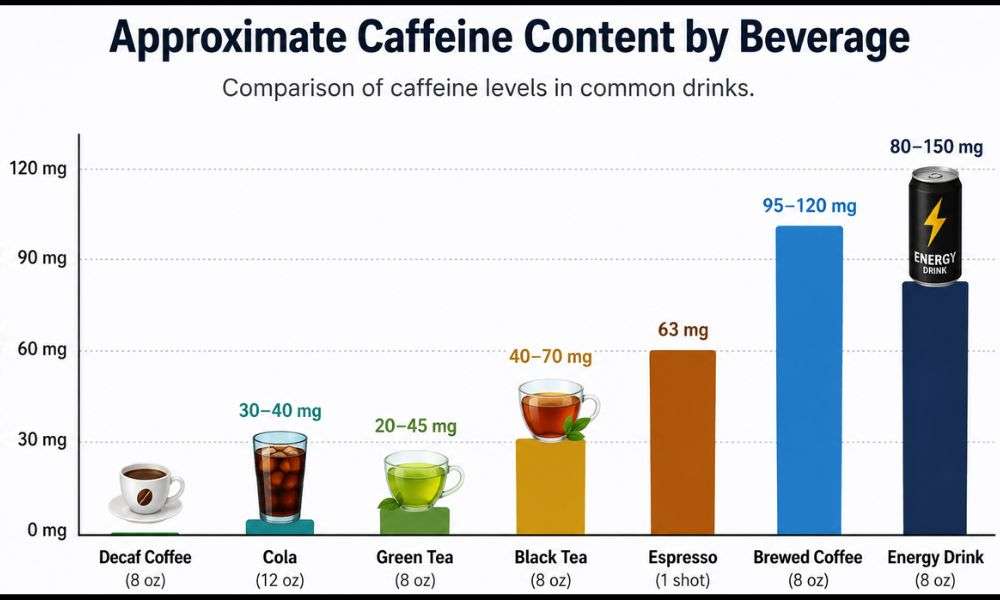
Caffeine is not limited to coffee. Many popular drinks contain varying amounts, which can add up throughout the day without people realizing it.
| Beverage | Serving Size | Caffeine |
|---|---|---|
| Black Tea | 8 oz | 40–70 mg |
| Brewed Coffee | 8 oz | 95–120 mg |
| Cola | 12 oz | 30–40 mg |
| Energy Drink | 8 oz | 80–150 mg |
| Espresso | 1 shot | 63 mg |
| Green Tea | 8 oz | 20–45 mg |
Coffee and Espresso Drinks
Coffee is the most common source of caffeine in daily life. Espresso-based drinks can contain concentrated amounts, which may quickly affect energy levels and the stress response in sensitive individuals.
Energy Drinks
Energy drinks often contain high caffeine levels along with sugar and other stimulants. This combination can increase alertness but may also trigger anxiety symptoms in people who are sensitive to stimulants.
Tea and Matcha
Tea contains moderate caffeine, but matcha can sometimes feel stronger because the whole leaf is consumed. Even though it is milder than coffee, it can still affect people with higher caffeine sensitivity.
Soft Drinks
Many sodas contain added caffeine, even if the amount seems small. Regular consumption throughout the day can slowly add up and contribute to restlessness or sleep disruption.
Chocolate Products
Chocolate naturally contains caffeine and theobromine. While the amount is lower, frequent intake can still contribute to stimulation, especially in combination with other sources.
Pre-Workout Supplements
These products are designed to boost energy and performance. They often contain high doses of caffeine, which can strongly activate the stress response and increase heart rate.
Over-the-Counter Medications
Some pain relievers and cold medicines include caffeine to improve effectiveness. People often overlook these hidden sources, which can unintentionally increase total daily intake.
How Much Caffeine Is Too Much?
Recommended Daily Limits
Most healthy adults can usually tolerate up to about 400 mg of caffeine per day without serious side effects. This amount is roughly similar to about four cups of brewed coffee. However, the recommended limit can different from person to person. People with higher caffeine sensitivity may feel effects at much lower amounts, sometimes even after one cup.
According to research from trusted health sources, moderate caffeine intake is generally considered safe for most adults, but sensitivity varies from person to person. For more information on caffeine safety recommendations, you can check guidance from Mayo Clinic caffeine guide.
When Moderate Intake Becomes Excessive
Caffeine becomes a problem when it starts affecting daily comfort, sleep, or emotional balance. Even moderate intake can feel excessive if it triggers anxiety symptoms or increases the body’s stress response. In these cases, the issue is less about the number and more about how your body reacts.
Signs You Are Consuming Too Much Caffeine
Common signs of overconsumption include a racing heartbeat, restlessness, irritability, and trouble sleeping. Some people may also notice shakiness or feeling “on edge” throughout the day. If these symptoms appear regularly after caffeine intake, it may be a sign that your body is receiving more caffeine than it can comfortably handle.
The chart below shows approximate caffeine levels in common beverages for better comparison.
How Long Can Caffeine Anxiety Last?
Duration of Symptoms
Caffeine-related anxiety usually does not last very long, but the exact time depends on the person and how much caffeine was consumed. In most cases, symptoms start within 30 to 60 minutes after intake and peak quickly. For many people, the strongest effects fade within a few hours as the body begins to process and remove caffeine.
However, in individuals with higher caffeine sensitivity or lower tolerance, feelings of restlessness, a racing heartbeat, or mild anxiety symptoms can last longer. This is because caffeine stays in the system for several hours before it is fully broken down.
Factors That Affect Recovery Time
Recovery time varies based on several personal and lifestyle factors. The amount of caffeine consumed plays a major role, but it is not the only factor. People with slower metabolism, poor sleep, or high stress levels may experience longer-lasting effects.
The body’s natural stress response also influences how intense and prolonged symptoms feel. Hydration, food intake, and overall health can either speed up recovery or make symptoms linger a bit longer.
Relief Tips for Caffeine-Related Panic Symptoms
Stop Additional Caffeine Intake
If you start feeling anxious after caffeine, the first step is to avoid more of it. Even small extra amounts can keep the stress response active and make symptoms feel stronger. Give your body time to settle instead of adding more stimulation.
Drink Water and Stay Hydrated
Water helps your body process caffeine more smoothly. Staying hydrated can reduce feelings of dizziness and restlessness. It also supports overall balance in the nervous system, which may help calm anxiety symptoms over time.
Practice Slow Breathing Techniques
Slow breathing can help bring your heart rate back to a normal rhythm. Try inhaling deeply through your nose, holding for a few seconds, and exhaling slowly. This signals the body to relax and reduces the feeling of a racing heartbeat.
Take a Short Walk
Light movement can help burn off extra energy created by caffeine. A short walk may reduce shakiness and help your mind feel more grounded. It also supports natural stress release without overwhelming the body.
Eat a Balanced Meal
Food can slow down how caffeine is absorbed in the body. A balanced meal with protein and healthy carbs can help stabilize energy levels and reduce sudden spikes in alertness or nervous tension.
Improve Sleep Quality
Good sleep helps reset the body after caffeine effects. Poor sleep can make the nervous system more sensitive, so improving rest can reduce future reactions. A calm sleep routine supports overall caffeine sensitivity control and emotional balance.
How to Reduce Caffeine Without Withdrawal Problems
Gradual Reduction Strategy
Cutting caffeine too quickly can lead to headaches, tiredness, and irritability. A better approach is to reduce it slowly so your body can adjust. This helps prevent strong withdrawal effects and keeps your stress response more stable. Start by lowering your daily intake little by little instead of stopping suddenly.
Switching to Lower-Caffeine Alternatives
Another helpful method is replacing strong caffeinated drinks with milder options. For example, you can switch from espresso to regular coffee or from coffee to tea. These small changes can lower overall intake while still giving you some energy without triggering strong anxiety symptoms or jittery feelings.
Decaffeinated Options
Decaf drinks are a good way to keep your daily routine without too much caffeine. They still offer the taste and comfort of coffee or tea but with much lower stimulation. This is especially useful for people with higher caffeine sensitivity, as it helps reduce the chance of restlessness or sleep issues.
When Should You Seek Professional Help?
Symptoms That Should Not Be Ignored
Sometimes caffeine effects go beyond normal restlessness. If you notice strong or repeated anxiety symptoms such as chest tightness, ongoing panic feelings, or a constantly racing heartbeat, it may be time to take them seriously. These signs should not be ignored, especially if they happen often or feel intense.
When Anxiety Persists Despite Cutting Back on Caffeine
If you reduce caffeine but still feel anxious, shaky, or overwhelmed, the issue may not be only related to caffeine. In some cases, the body’s stress response stays active due to underlying anxiety conditions. This is a strong signal to look deeper into mental health support.
Treatment Options for Anxiety Disorders
There are several effective ways to manage anxiety, depending on your situation. These may include therapy, lifestyle changes, or medical treatment guided by a healthcare professional. The goal is to help calm the nervous system and reduce long-term sensitivity, especially for those with higher caffeine sensitivity or ongoing panic symptoms.
Frequently Asked Questions
Can caffeine cause panic attacks hours later?
Yes, in some cases it can. Caffeine stays in the body for several hours, so its effects may continue even after you stop feeling alert. For people with higher caffeine sensitivity, symptoms like a racing heartbeat or anxiety symptoms can appear later when stress levels build up or sleep is affected.
How long does caffeine anxiety last?
It usually lasts a few hours, depending on how much caffeine you consumed and how your body processes it. In most people, the strongest effects fade as caffeine is broken down, but those with stronger stress response reactions may feel mild symptoms for longer.
Can caffeine cause shortness of breath?
Yes, it can in sensitive individuals. Caffeine may increase heart rate and stimulate the nervous system, which can sometimes feel like shortness of breath. This sensation is usually linked to anxiety-like physical reactions rather than a direct breathing problem.
Can coffee make anxiety worse?
Yes. Coffee can increase alertness and energy, but it may also intensify existing anxiety symptoms in some people. If someone already feels stressed or overwhelmed, caffeine can make those feelings more noticeable.
Why does coffee make me feel shaky?
Coffee stimulates the nervous system and can activate the body’s stress response, which may lead to shakiness or trembling. This is more common in people who are sensitive to caffeine or consume it in higher amounts.
Can energy drinks trigger panic attacks?
Yes, energy drinks can trigger strong physical reactions because they often contain high levels of caffeine and other stimulants. In some individuals, this may feel similar to panic attacks, especially if consumed quickly or in large amounts.
Is caffeine-induced anxiety temporary?
Yes, it is usually temporary. Symptoms often improve once caffeine starts leaving the body. Drinking water, resting, and avoiding more caffeine can help the body return to normal balance.
Can quitting caffeine reduce anxiety?
For many people, yes. Reducing caffeine can lower stimulation of the nervous system and help calm ongoing stress response activity. However, results vary depending on individual health and lifestyle.
What should I drink instead of coffee if I have anxiety?
You can try herbal teas, warm water with lemon, or low-caffeine options like green tea. These choices are gentler on the body and less likely to trigger caffeine sensitivity reactions.
How much caffeine is safe for people with anxiety?
There is no single fixed amount. Some people tolerate small doses, while others feel symptoms even with low intake. Many individuals with caffeine sensitivity find that reducing caffeine or avoiding it later in the day helps manage anxiety better.
Conclusion
Caffeine can affect the body in different ways, and for some people it may increase feelings linked with panic attacks and anxiety symptoms. This happens because caffeine stimulates the nervous system and can activate the body’s stress response, especially in individuals with higher caffeine sensitivity. While many people enjoy caffeine without any problems, others may notice discomfort such as a racing heartbeat, restlessness, or sudden nervous feelings after consuming it.
Paying attention to how your body responds is important. Simple changes like reducing intake, choosing lighter alternatives, or adjusting timing can make a noticeable difference in daily comfort. If symptoms continue even after lowering caffeine, it is always a good idea to seek professional guidance for proper support and long term well being.