
Why Does Anxiety Cause Chest Tightness?
Have you ever felt a sudden tightness in your chest and wondered if something was seriously wrong? The sensation can be alarming. Many people immediately think of heart problems, breathing difficulties, or another medical emergency. However, after medical tests come back normal, the confusion often remains. If nothing is physically wrong, why does the discomfort keep happening?
This experience is surprisingly common among people living with anxiety. Anxiety affects not only thoughts and emotions but also the body. It can create real physical symptoms that feel intense and frightening, including chest tightness, pressure, and discomfort. Understanding why anxiety causes chest tightness even when nothing is wrong can help reduce fear and provide reassurance. By learning how anxiety affects the nervous system and body, you can better recognize symptoms and take steps toward relief. . According to the National Institute of Mental Health (NIMH) Anxiety Disorders Guide, anxiety can trigger physical symptoms throughout the body, including muscle tension, changes in breathing, and increased stress responses that may feel overwhelming.
What Is Anxiety-Related Chest Tightness?
Anxiety-related chest tightness refers to feelings of pressure, tension, squeezing, or discomfort in the chest that occur as part of the body’s stress response. Although the sensation is real, it is not always caused by a heart or lung condition.
When anxiety activates the body’s survival system, muscles tighten, breathing patterns change, and stress hormones increase. Together, these reactions can create uncomfortable sensations in the chest.
How It Feels
People describe anxiety-related chest tightness in different ways, including:
- A squeezing feeling in the chest
- Pressure or heaviness
- Tight muscles around the ribs
- Sharp or aching chest discomfort
- Difficulty taking a deep breath
- Feeling as though something is sitting on the chest
The intensity can vary from mild discomfort to symptoms that closely resemble a medical emergency.
Key Takeaway
Chest tightness caused by anxiety is a real physical symptom. It is not imagined or all in your head. The sensation results from the body’s natural stress response.
Anxiety-related chest tightness often develops through a combination of muscle tension, altered breathing, nervous system activation, and increased awareness of bodily sensations.
Managing anxiety-related chest tightness often requires calming the nervous system, reducing stress, and developing healthy coping strategies.
Why Does Anxiety Cause Chest Tightness Even When Nothing Is Wrong?
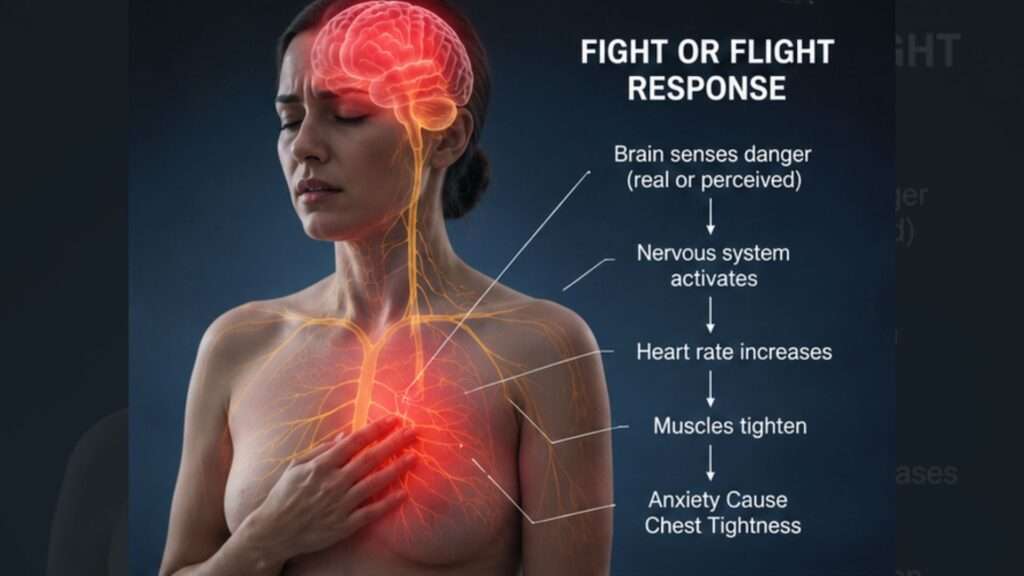
Anxiety triggers a series of physical changes designed to protect the body from danger. Even when there is no actual threat, the brain may interpret stress, worry, or fear as a signal to activate survival mode.
The Fight-or-Flight Response
The body’s fight-or-flight response prepares you to react quickly to perceived danger. This survival mechanism is explained in more detail in What Happens in Your Brain During an Anxiety Episode, which explores how anxiety affects brain function and stress responses.
When this happens:
- Heart rate increases
- Muscles tighten
- Breathing becomes faster
- Stress hormones rise
- Blood flow shifts toward major muscle groups
These changes are helpful during genuine emergencies. However, when anxiety repeatedly activates this response, chest tightness may occur even in safe situations.
Muscle Tension
Anxiety often causes muscles throughout the body to tighten without people realizing it.
The muscles around the chest, shoulders, neck, and upper back can become tense during periods of stress. Over time, this tension may create feelings of pressure, soreness, or tightness in the chest area.
Changes in Breathing Patterns
Many people breathe more quickly or shallowly during anxiety. Learning techniques from Breathing and Grounding Exercises for Sudden Anxiety can help regulate breathing and reduce physical symptoms during stressful moments.
This pattern can lead to:
- Chest discomfort
- Shortness of breath
- Lightheadedness
- Increased awareness of breathing
As breathing becomes more irregular, the sensation of chest tightness may intensify.
Increased Body Awareness
Anxiety can make people highly aware of normal bodily sensations.
A minor muscle ache or slight chest sensation that would normally go unnoticed may suddenly feel alarming. This increased attention can create a cycle where worry intensifies physical symptoms, which then increase anxiety even further.

Common Causes of Anxiety-Related Chest Tightness
Several factors can contribute to chest tightness associated with anxiety.
Chronic Stress
Long-term stress keeps the nervous system activated. This ongoing state of alertness can lead to persistent muscle tension and physical discomfort.
Panic Attacks
During a panic attack, chest tightness is one of the most common symptoms. The sensation may appear suddenly and feel intense.
Generalized Anxiety Disorder
People with generalized anxiety disorder often experience ongoing worry that can trigger recurring physical symptoms, including chest discomfort.
Social Anxiety
Stressful social situations can activate anxiety responses that lead to chest tightness before presentations, meetings, or social gatherings.
Health Anxiety
Individuals who frequently worry about their health may become hyperfocused on chest sensations, making normal physical feelings seem more threatening.
Symptoms That Often Occur Alongside Chest Tightness
Chest tightness rarely occurs by itself. Other anxiety symptoms often appear at the same time.
Physical Symptoms
- Rapid heartbeat
- Sweating
- Dizziness
- Muscle tension
- Trembling
- Fatigue
- Nausea
Emotional Symptoms
- Fear
- Excessive worry
- Nervousness
- Irritability
- Feeling overwhelmed
Cognitive Symptoms
- Racing thoughts
- Difficulty concentrating
- Fear of losing control
- Catastrophic thinking
Anxiety Chest Tightness vs Heart Problems
One of the biggest concerns people have is whether their symptoms indicate anxiety or a heart condition.
| Anxiety-Related Chest Tightness | Heart-Related Chest Pain |
|---|---|
| Often linked to stress or worry | May occur during physical exertion |
| Tends to reduce as anxiety fades | Usually does not improve simply by relaxing |
| Frequently accompanied by anxiety symptoms | May include sweating, nausea, or pain spreading to the arm or jaw |
| May come and go | Can become progressively worse |
| Often associated with rapid breathing | May occur without anxiety |
Important Note
Chest pain should never be automatically assumed to be anxiety. New, severe, or unexplained chest symptoms should always be evaluated by a healthcare professional.
How Anxiety Chest Tightness Affects Daily Life
Even when medical tests show no underlying illness, recurring chest tightness can affect everyday functioning.
People may:
- Avoid physical activity
- Fear being alone
- Frequently seek reassurance
- Struggle to concentrate
- Experience sleep difficulties
- Worry constantly about their health
Over time, these concerns can increase anxiety and reduce quality of life.
Can Anxiety Cause Chest Tightness Every Day?
Yes. Some individuals experience chest tightness daily, particularly during periods of prolonged stress.
The nervous system can become highly sensitive after repeated activation. As a result, even small stressors may trigger physical symptoms.
Daily symptoms do not necessarily mean something dangerous is happening, but they may indicate that anxiety is becoming more difficult to manage.
How to Relieve Anxiety-Related Chest Tightness
The most effective approach usually involves addressing both the physical symptoms and the underlying anxiety.
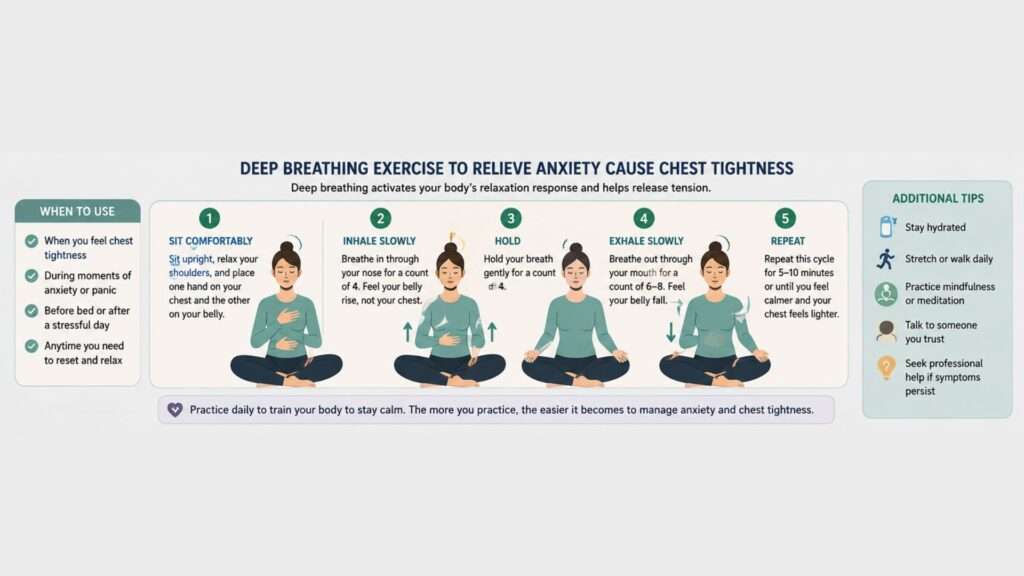
Practice Slow Breathing
Slow, controlled breathing can help calm the nervous system.
Try:
- Inhale gently through the nose
- Pause briefly
- Exhale slowly through the mouth
This can help reduce muscle tension and improve breathing patterns.
Use Grounding Techniques
Grounding exercises help bring attention back to the present moment.
Examples include:
- Noticing five things you can see
- Feeling your feet on the floor
- Focusing on physical sensations around you
Reduce Stimulants
Caffeine and energy drinks may increase anxiety symptoms in some individuals.
Limiting stimulants can help reduce nervous system activation.
Engage in Gentle Movement
Walking, stretching, or light exercise can release muscle tension and improve emotional regulation.
Address Underlying Stress
Identifying ongoing sources of stress can help prevent repeated activation of the anxiety response.
Professional Treatment Options
If symptoms continue to interfere with daily life, professional support may be beneficial.
Cognitive Behavioral Therapy
Cognitive Behavioral Therapy (CBT) helps individuals identify and change thought patterns that contribute to anxiety.
Anxiety-Focused Counseling
Therapy provides tools for understanding triggers and developing healthier responses to stress.
Medication
In some cases, healthcare providers may recommend medication to help manage anxiety symptoms.
Lifestyle Changes
Improving sleep, physical activity, nutrition, and stress management can support long-term recovery.
When Should You Seek Medical Help?
Always seek medical evaluation if:
- Chest symptoms are new
- Pain is severe
- Symptoms occur during physical exertion
- Pain spreads to the jaw, arm, or back
- You experience fainting or loss of consciousness
- You are unsure whether anxiety is the cause
A healthcare professional can rule out medical conditions and provide appropriate guidance.
FAQs
1. Can anxiety really cause chest tightness?
Yes. Anxiety can trigger muscle tension, breathing changes, and nervous system activation that create chest discomfort.
2. How long can anxiety chest tightness last?
It can last from a few minutes to several hours. In some cases, mild symptoms may persist longer during periods of ongoing stress.
3. Can chest tightness happen without a panic attack?
Yes. Many people experience anxiety-related chest tightness even when they are not having a panic attack.
4. Does anxiety chest tightness feel like a heart attack?
Sometimes. The symptoms can be similar, which is why medical evaluation is important when symptoms are new or concerning.
5. Can stress alone cause chest discomfort?
Yes. Chronic stress can lead to muscle tension and nervous system activation that contribute to chest tightness.
6. Does caffeine make anxiety chest tightness worse?
For some individuals, caffeine can increase anxiety symptoms and make chest tightness more noticeable.
7. What breathing techniques help with chest tightness?
Slow diaphragmatic breathing and paced breathing exercises can help calm the nervous system.
8. Is anxiety chest tightness dangerous?
The symptom itself is usually not dangerous when caused by anxiety, but chest symptoms should always be medically evaluated when there is uncertainty.
9. Can therapy help reduce anxiety chest tightness?
Yes. Therapy can address anxiety triggers and teach coping strategies that reduce physical symptoms.
10. When should I worry about chest tightness?
You should seek medical attention whenever symptoms are severe, unusual, or accompanied by other concerning signs.
Conclusion
Anxiety can create powerful physical symptoms, and chest tightness is one of the most common. Although the sensation can feel frightening, it often results from the body’s natural stress response rather than a serious medical problem. Muscle tension, changes in breathing, and nervous system activation all play important roles in creating these sensations.
Understanding why anxiety causes chest tightness even when nothing is wrong can help reduce fear and encourage healthier coping strategies. If symptoms continue or interfere with daily life, professional support can provide valuable guidance. With the right tools and support, it is possible to manage anxiety and regain a greater sense of comfort and confidence.
Author Bio
Som Adnan is the founder of Mental Health Knowledge and a mental health content writer dedicated to making psychological information accessible and easy to understand. Through evidence-based articles, Som helps readers explore topics related to anxiety, trauma, emotional well-being, and mental health recovery with clarity, compassion, and practical guidance.